Why a BC to ES Adapter Could Electrocute You
Changing a lightbulb seems like one of the simplest tasks in any household. However, if you are using a Bayonet Cap (BC) to Edison Screw (ES) converter / adaptor to make an ES bulb fit a BC lamp holder, that simple twist could put you at immediate risk of a severe electric shock. While these adapters promise a quick fix for mismatched bulbs (lamps), a fundamental design flaw creates a dangerous game of polarity roulette.
Hazard: A 50/50 chance of turning the fully exposed outer metal thread of your ES bulb into a live 230V BC to ES adaptor if the bayonet cap to Edision screw adaptor is fitted the wrong way round.
Risk: Electric shock.
Important Note: It is impossible to know if a BC to ES adaptor is inserted into the BC lamp holder the correct way round (correct polarity) without actually testing it with a suitable test meter.
Light bulb or lightbulb is a commonly used term for a Lamp. Lamp is the correct technical term.
Reverse Polarity = Neutral and Live reversed (the wrong way round).
Before we delve into the route causes and dangers of BC to ES converters and adapters lets first explain how each lamp type works which will help you to understand the risks involved.
Bayonet Cap Lamps
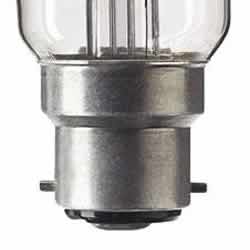
A BC lamp is a two pin “insert and twist” type lamp. Common BC lamp sizes includes B22 (standard) and B15 (small).
BC Lamp Holders:
Inside a Bayonet Cap lamp holder are two metal contact pins, one pin will be live and the other pin will be neutral. BC lamps are not polarity sensitive, meaning, it does not matter which way round the bayonet cap lamp is inserted into the bayonet cap lamp holder.
BC Lamps:
At the bottom of a BC lamp cap are two metal contact pads, when these contact pads are in contact with the BC lamp holder pins the lamp will be energised when the light switch is in the on position.
Once a BC lamp is correctly fitted into a BC lamp holder the live and neutral pins are not accessible to touch.
BS EN 61184 is a standard that discusses bayonet lampholders. A bayonet mount or bayonet connector is a fastening mechanism consisting of a cylindrical male side with one or more radial pins, and a female receptor with matching L-shaped slot(s) and with spring(s) to keep the two parts locked together.
Edison Screw Lamps
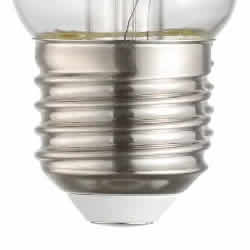
An ES lamp is a “screw-in” type lamp with a center contact pad and outer threaded screw cap.
Edison Screw (ES) lamps have a metal contact center pin and an outer metal screw thread. The center pin must be in contact with the center pin of the Edision screw lamp holder, the metal threaded screw in part of the lamp acts as the neutral.
Warning: If an ES lamp holder is connected (wired) incorrectly it will result in reverse polarity (live and neutral the wrong way round), which in turn will give a risk of electric shock.
Many ES lamps will still work even if the polarity is reversed.
Dangers: If a reverse polarity exists in an Edison Screw lamp holder, the center pin will be neutral and the metal threaded screw-in part will be live, hence the electric shock risk if a person was to touch it.
Even if an ES lamp is faulty (not working), and a reverse polarity exists, the metal threaded screw-in part of the lamp will still be live.
Due to the risk of an electric shock caused by a reverse polarity in an ES lamp holder, it is imperative to test the ES lamp holder for polarity to ensure it is correct.
Always seek expert advise from an Electrician, do not attempt to test polarity yourself as this in itself could pose a risk if its not conducted properly or safely.
BS EN 60238 is the British and European standard specifying safety, construction, and testing requirements for Edison screw lampholders (E14, E27, and E40).
BC to ES Adaptors
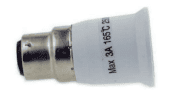
Bayonet Cap to Edison Screw adaptors can be dangerous by posing an electric shock risk if the polarity is wrong.
As mentioned above regarding Edison Screw lamps, the correct polarity for ES lamps and ES lamp holders is paramount due to the electric shock risk if the polarity is incorrect (reversed).
A Bayonet Cap (BC) can be inserted into a BC lamp holder in two positions, one position will be the correct polarity and the other position will be in reverse polarity. For a BC lamp holder and a BC lamp to BS EN 61184 this is normal, BC lamps are safe for either polarity.
However, for screw-in type lamps, the center pin/pad MUST BE connected to live, and the outer metal screw-in cap MUST BE connected to neutral, otherwise there will be a risk of an electric shock.
The Danger: A BC to ES adaptor can be fitted into a BC lamp holder in two positions, correct polarity or incorrect polarity depending on which way round the BC adaptor was fitted to the BC lamp holder which can result in reverse polarity on the ES side of the adaptor, therefore posing an electric shock risk if a person was to touch the metal outer threaded (screw-in part) of the lamp.
Many of these Bayonet to ES adaptors have been recalled by Local Authority Trading Standards and the Office for Product Safety and Standards, stating the product does not meet the requirements of the Electrical Equipment (Safety) Regulations 2016.
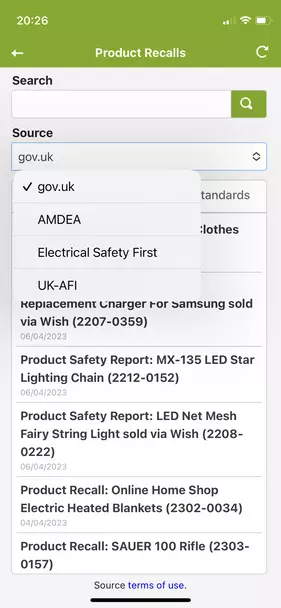
Electrical Product Safety Recalls
Stay updated and informed with our free safety recalls product feed.
No, Bayonet to screw-in lamp adaptors pose an electric shock risk.
There is a 50/50 chance of the BC to ES adaptor being fitted to the BC lamp holder the wrong way round resulting in a reverse polarity (live and neutral the wrong way round) which in turn will energise the threaded metal screw cap of the ES lamp and lamp holder or adapator.
BS 7671 Wiring Regulations – Polarity
During the polarity test, the following shall be verified (amongst other tests and verifications):
Under BS 7671 (IET Wiring Regulations), polarity requirements dictate that every single-pole protective and switching device (such as fuses, single-pole circuit breakers, and switches etc.) must be connected in the line (live) conductor only
Regulation 643.6 (ii): except for E14 and E27 lampholders to BS EN 60238, in circuits having an earthed neutral conductor, center contact bayonet and Edison screw lampholders have the outer or screwed contacts connected to the neutral conductor
The Ultimate Electricians App!
Download the Electrical Tools and Reference App for Android, iOS or get the desktop online version.